EFFecting Change: If You Own It, Why Can't You Fix It? on July 23

AI technologies are affecting our civil liberties as never before. Ensuring that AI serves people, not power, starts with cutting through the hype. AI technologies are not magic wands—they are general-purpose tools. If we want to regulate those technologies to reduce harms without shutting down benefits, we have to focus on who uses AI, what products they use, and how they use them.

Where we see potential benefits, like improving weather forecasting, facilitating medical research, identifying systemic bias, or fostering accessibility, we work to ensure those benefits can be realized. 

Where we see potential harms, we consider the practical and legal tools we already have, like pressure campaigns, privacy lawsuits, and transparency measures. If we need new tools, we should create protections tailored to the actual problem—not just to the latest outrage. For example, if policymakers are worried about AI accelerating systemic privacy violations, they should enact real and comprehensive privacy legislation that covers all corporate surveillance and data use, and close the data broker loophole to limit government surveillance. 

And to keep the window open for a better future, we fight for a competitive innovation environment. For example, if we want AI models that don’t replicate existing social and political biases, we need to make enough space for new players to build them, and avoid giving today’s giants the power to block future competitors from offering us a better tool or product. 

In research labs, conference rooms, courtrooms, and legislatures, people are making decisions that will determine who AI serves and how. EFF works to ensure those decisions support freedom, justice and future innovation.

Take action today

Stay informed

Artificial Intelligence Highlights

Artificial Intelligence Updates

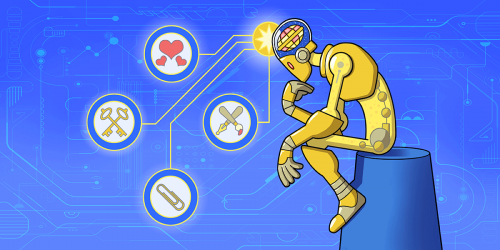
A robot poses as The Thinker by Rodin

Americans Are Uncomfortable with Automated Decision-Making

Imagine a company you recently applied to work at used an artificial intelligence program to analyze your application to help expedite the review process. Does that creep you out? Well, you’re not alone.Consumer Reports recently released a national survey finding that Americans are uncomfortable with use of artificial intelligence...

How to Fix the Internet - Kit Walsh & Jacob Hoffman-Andrews - AI in Kitopia

Podcast Episode: AI in Kitopia

Artificial intelligence will neither solve all our problems nor likely destroy the world, but it could help make our lives better if it’s both transparent enough for everyone to understand and available for everyone to use in ways that augment us and advance our goals — not for corporations or...

How to Fix the Internet - Nettice Gaskins - AI on the Artist's Palette

Podcast Episode: AI on the Artist's Palette

Collaging, remixing, sampling—art always has been more than the sum of its parts, a synthesis of elements and ideas that produces something new and thought-provoking. Technology has enabled and advanced this enormously, letting us access and manipulate information and images in ways that would’ve been unimaginable just a few decades...

Pages

Back to top

JavaScript license information